Exhibitions of my Apple-1 computers
My Apple-1 on display
About the preparations.#1 Since 2017 at the Deutsches Museum Munich / Germany
#2 July 14, 2018 till February 10, 2019 at the ZKM, Karlsruhe / Germany
#3 August 3-4, 2019 at the Computer History Museum in California, USA
Preparations - about the challenges of exhibiting an Apple-1
Some of my Apple-1 computers have been, or still are, on display.
I like the idea of sharing such a rare and important computer with other vintage computer enthusiasts.
The number of surviving Apple-1 computers is limited. Only 200, plus prototypes, were ever made, and because of their rarity and high value, not everyone who would like to see one has the chance.
Making such a rare and valuable piece of equipment available for an exhibition involves a great deal of effort.
Usually, a preparation time of weeks or months must be expected. Apart from organizational and administrative matters, insurance cover for transport and exhibition must be clarified.
Just a few considerations:
How does the computer get safely to the exhibition and back; who pays for transportation and who organizes it?
Is security ensured during transport and exhibition?
Who will pack, unpack and set up the computer?
Can damage to the computer during the exhibition be ruled out?
Is the exhibitor reputable and trustworthy?
Is it necessary, desirable and feasible for me to attend the exhibition?
Will the press be present and / or is a presentation wanted?
Is documentation necessary? Or a written description of the computer, its history etc.?
Am I at home, or is there enough time to deliver it or hand it over to the transport company? The computer is kept in a bank vault and must be ready for transport at exactly the right time.
Is the lighting, especially UV radiation, harmless or low enough to avoid damage, particularly to stamps or handwritten markings?
And so much more...
The risk of damaging the computer is very high. The Apple-1 computer is very old. Parts could break off. The coating can peel off, and other damage can occur.
This happened to one of my Apple-1 computers. A small part of the coating peeled off during transportation. It could not be repaired. Fortunately, the functionality was not affected, but visible damage remained.
Preparing the paperwork alone takes weeks. Many phone calls are needed, and a visit to customs is required. The Apple-1 computer has no regular serial number, but customs wants to be sure that it is the same item being brought back.
For one exhibition in the USA, I flew from Amsterdam in the Netherlands. Thanks to the European Union, transporting the Apple-1 between the Netherlands and Germany is not a problem. But at Schiphol Airport in Amsterdam, customs had to check the paperwork and the Apple-1 computers. It took a long time, with some discussion, many stamps and copies of documents, and waiting in a long line with other passengers who wanted to get tax back for duty-free items. Airport security always checks the Apple-1 computer. Again, one has to discuss the situation and make sure nobody handles the mainboard like a piece of old electronics. Once, a security officer threw the Apple-1 onto a table. I told her that it was worth several hundred thousand US dollars. Departing from the USA is not any easier. After returning to Amsterdam, the same customs procedure begins again. It simply takes even more time, phone calls, paperwork and, of course, more stamps. Back in Germany, there was another drive to a distant German customs office. There, the paperwork was checked again and the final stamps were added.
Yes, it is a challenge.
Because of all these problems and time-consuming preparations, several requests had to be declined. Some exhibitions in 2020 fell victim to the pandemic.
Deutsches Museum, Munich / Germany
I loaned my wonderful Copson Apple-1 to the Deutsches Museum free of charge. No payment was made, and I covered the delivery costs myself. The first questions from the press at the hand-over were "what can you do with it?", "can you send an email?", "why is it not in color?".
 +
Copson Apple-1 handover to the museum. *1
+
Copson Apple-1 handover to the museum. *1
 +
Headmaster Wolfgang M. Heckl, lender Achim Baqué and curator Anja Teuner. *1
+
Headmaster Wolfgang M. Heckl, lender Achim Baqué and curator Anja Teuner. *1
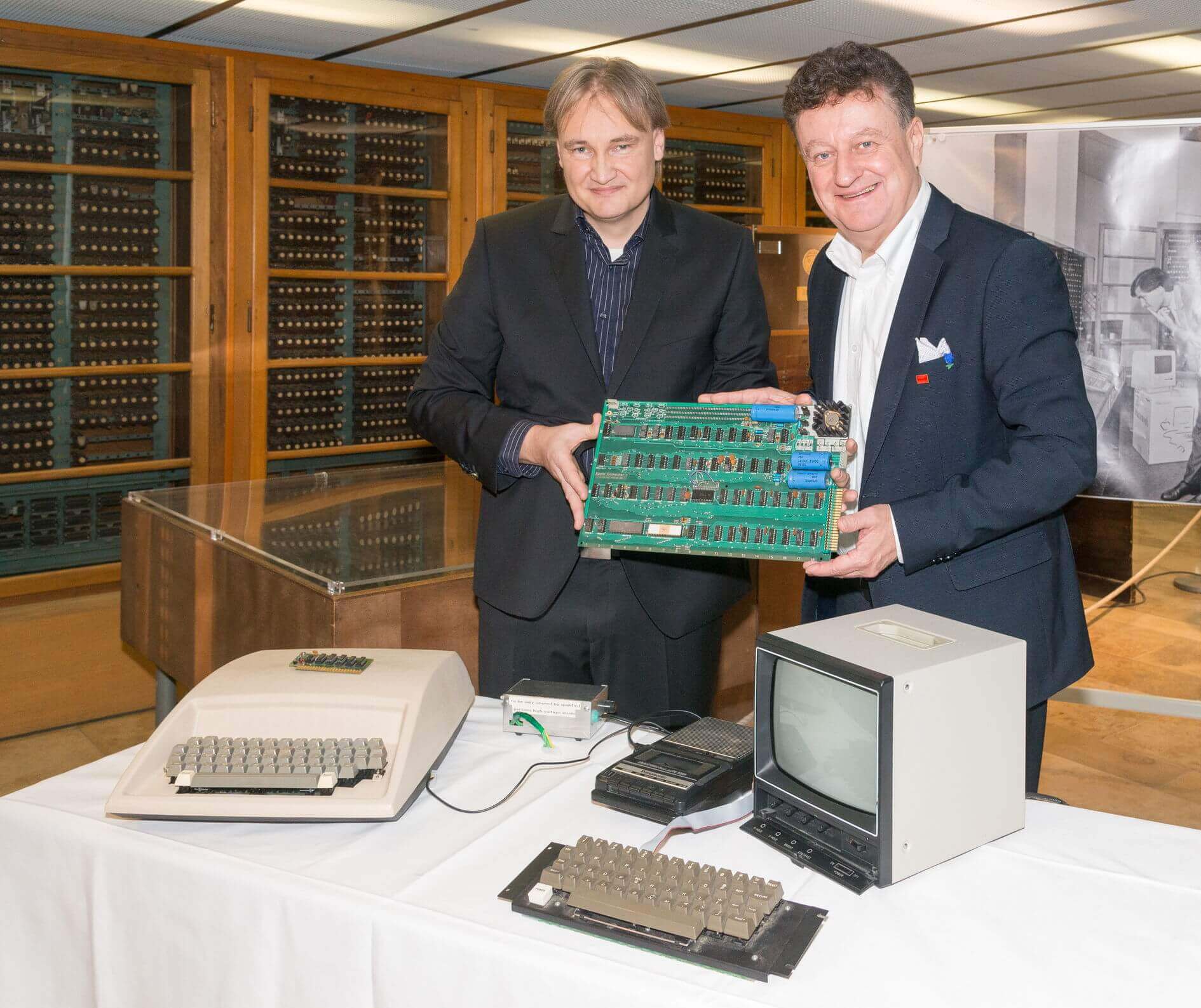 +
Achim Baqué hands over the Copson Apple-1 to Wolfgang M. Heckl. *1
+
Achim Baqué hands over the Copson Apple-1 to Wolfgang M. Heckl. *1
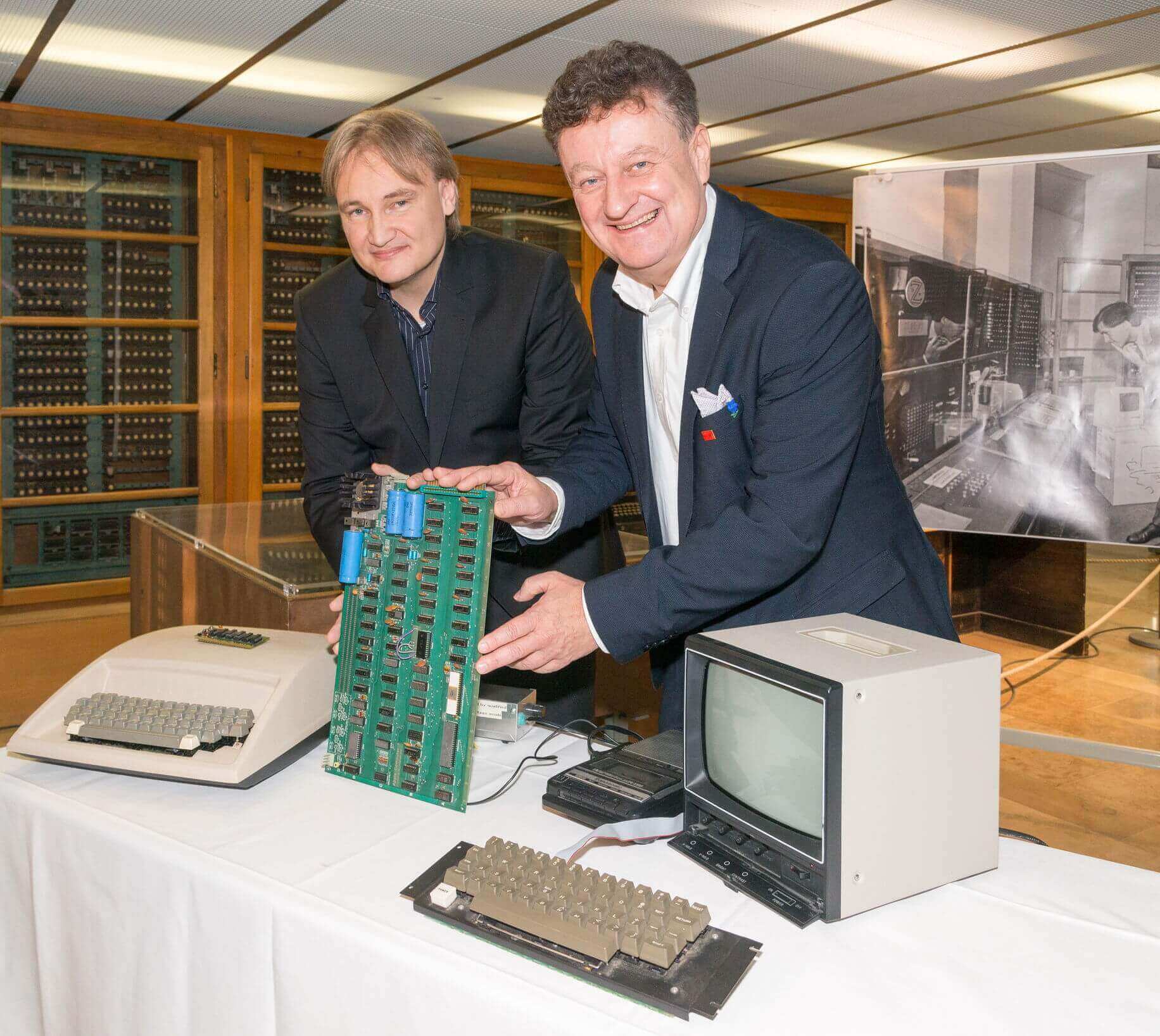 +
Achim Baqué hands over the Copson Apple-1 to Wolfgang M. Heckl. *1
+
Achim Baqué hands over the Copson Apple-1 to Wolfgang M. Heckl. *1
 +
Copson Apple-1 handover with curator Anja Teuner. *1
+
Copson Apple-1 handover with curator Anja Teuner. *1
 +
Copson Apple-1 handover with curator Anja Teuner. *1
+
Copson Apple-1 handover with curator Anja Teuner *1
+
Copson Apple-1 handover with curator Anja Teuner. *1
+
Copson Apple-1 handover with curator Anja Teuner *1
 +
Copson Apple-1 in front of Zuse computer. *1
+
Copson Apple-1 in front of Zuse computer. *1
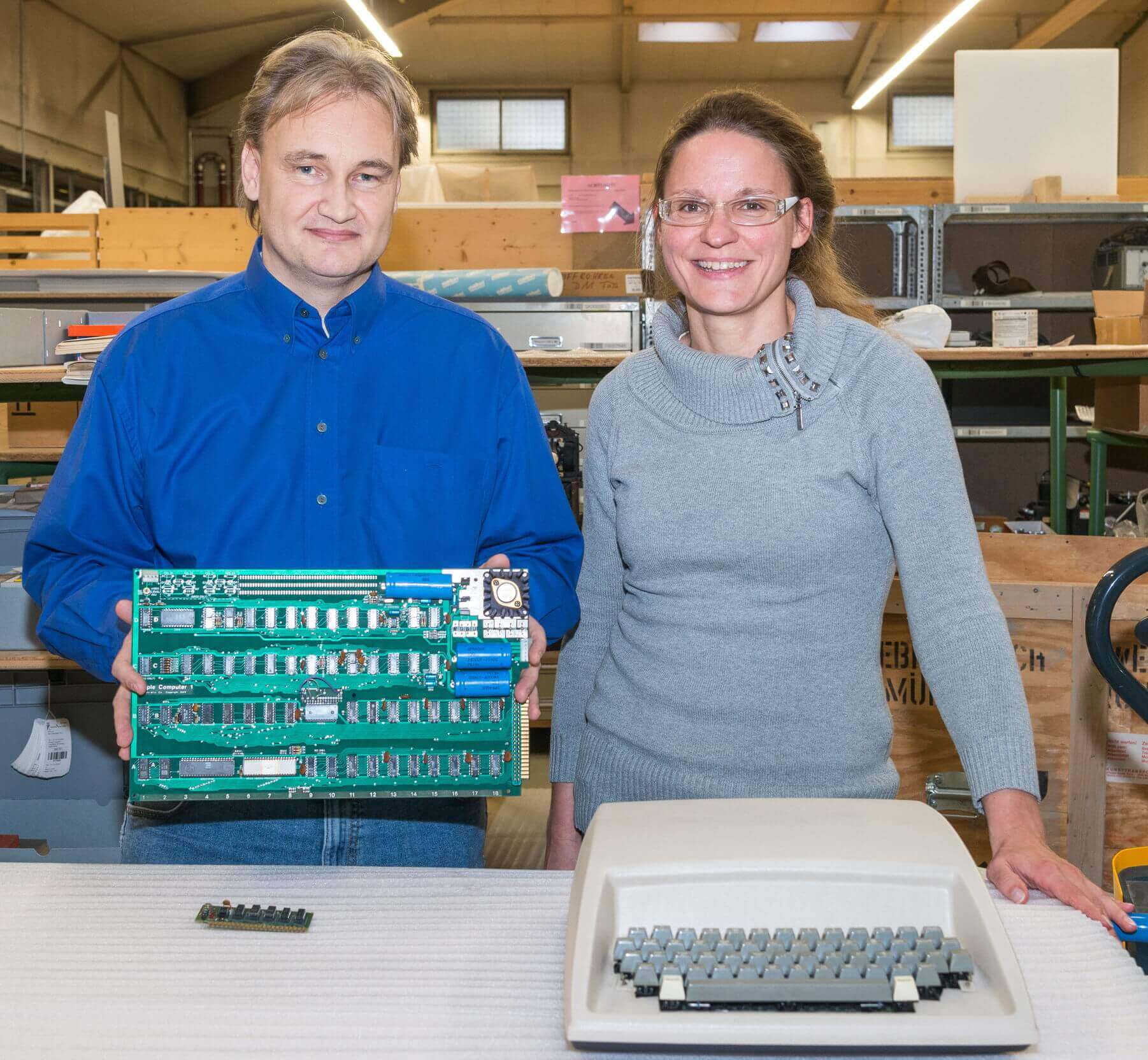 +
Day before handover to the museum. Curator Anja Teuner in the museum’s receiving department. *1
+
Day before handover to the museum. Curator Anja Teuner in the museum’s receiving department. *1
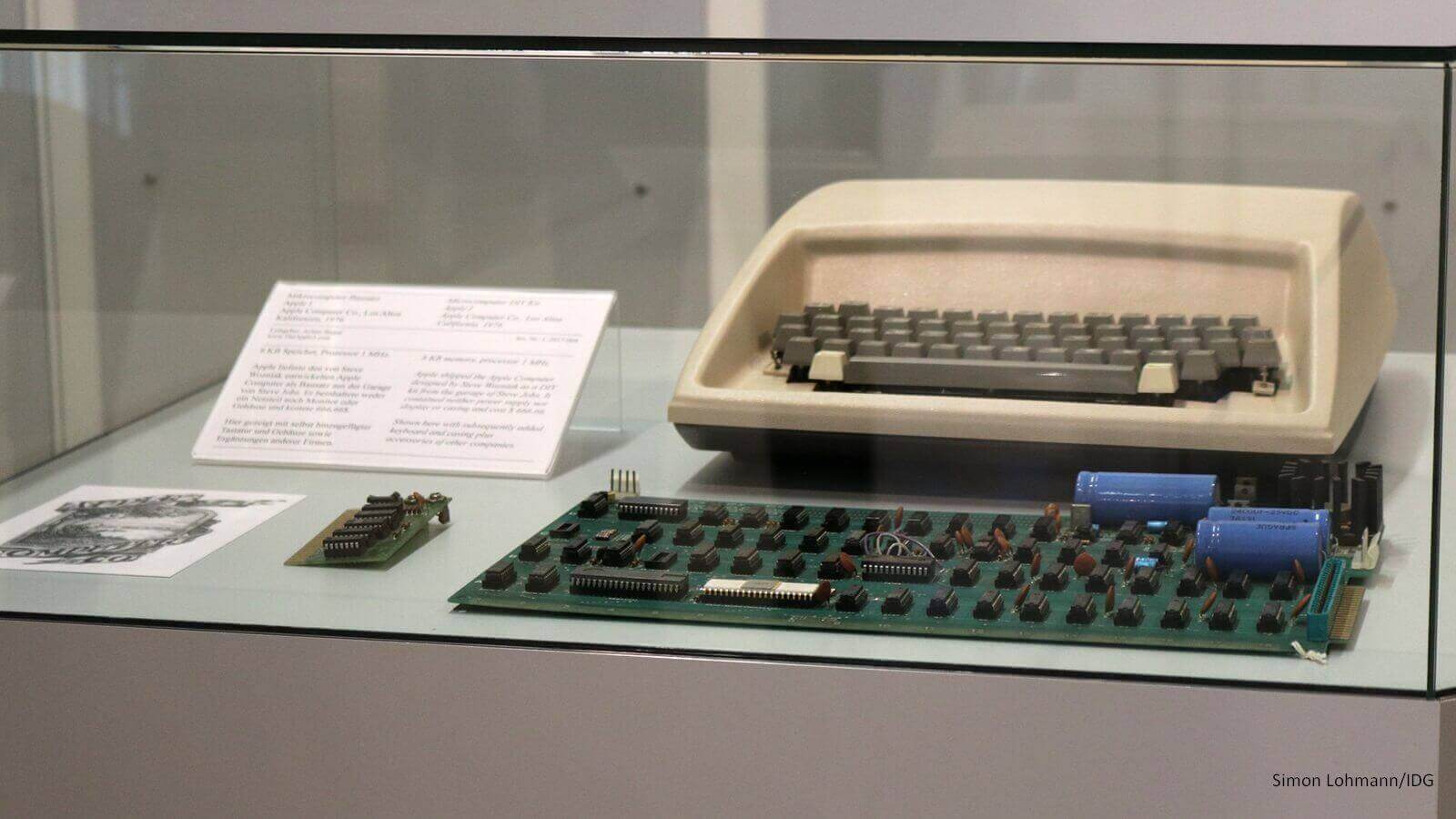 +
Copson Apple-1 on display. With kind permission of Simon Lohmann/IDG
+
Copson Apple-1 on display. With kind permission of Simon Lohmann/IDG
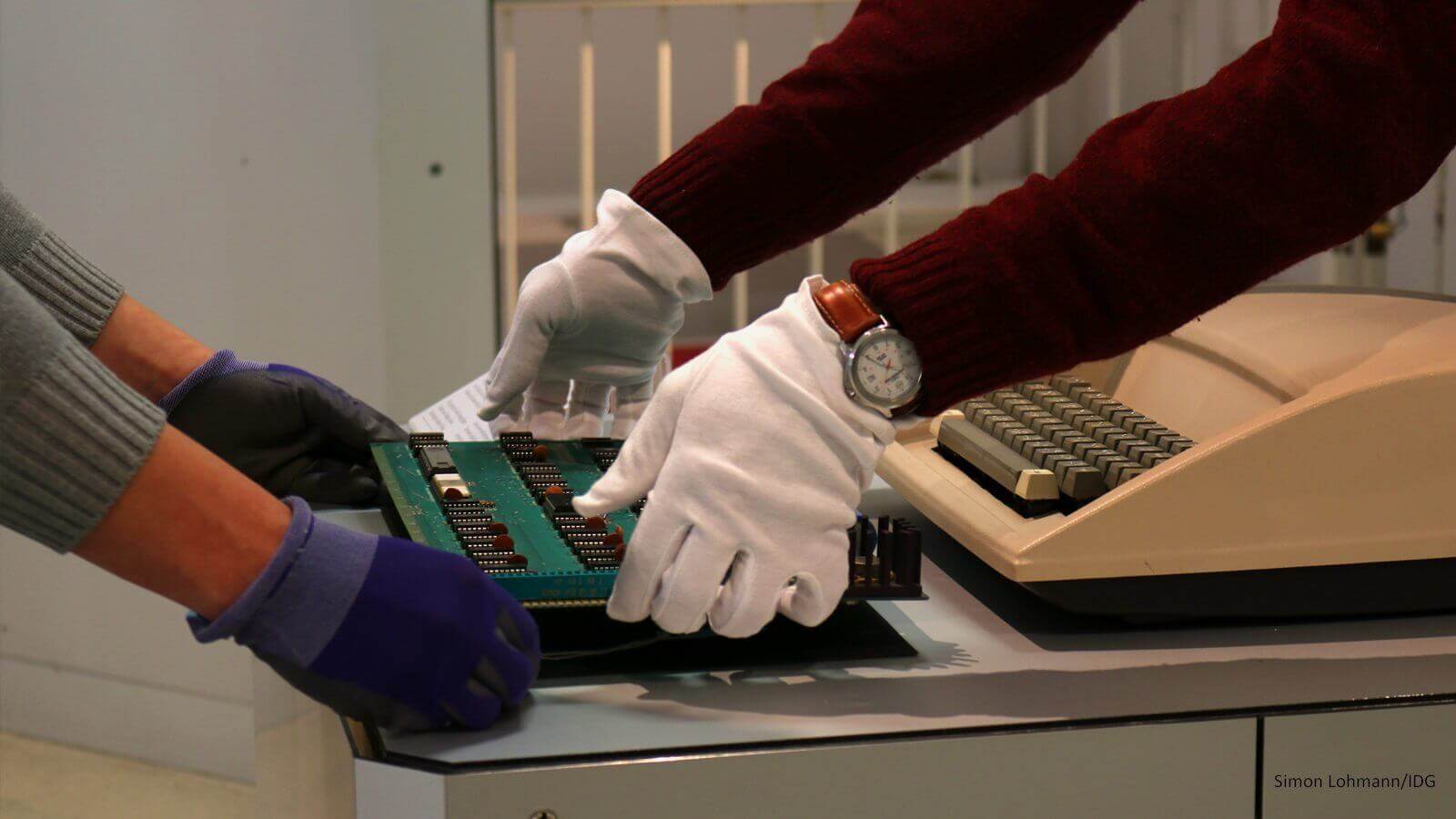 +
Copson Apple-1 on display. With kind permission of Simon Lohmann/IDG
+
Copson Apple-1 on display. With kind permission of Simon Lohmann/IDG
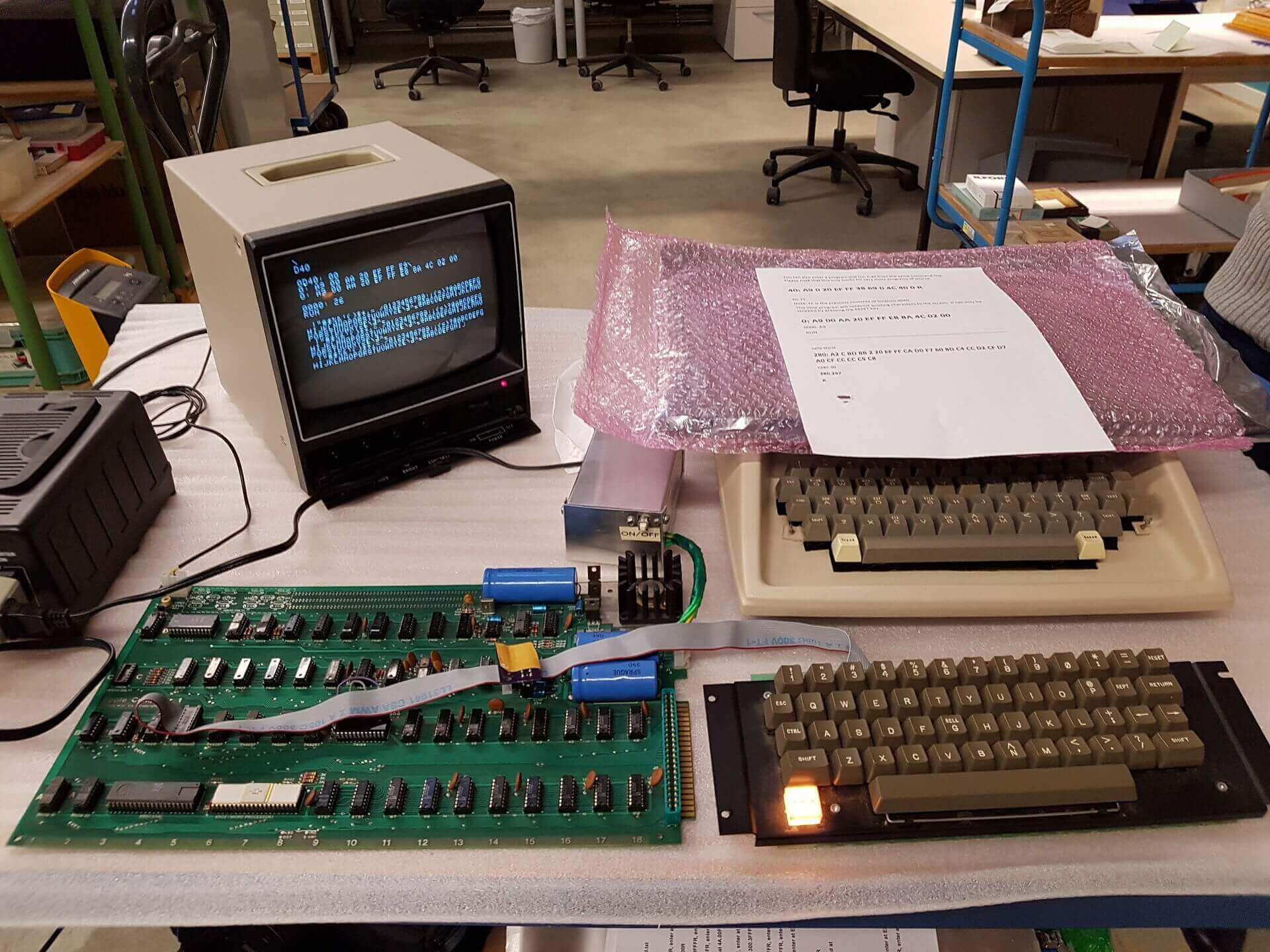 +
at the Deutsches Museum Munich
+
at the Deutsches Museum Munich
 +
Copson Apple-1 object-acceptance at the Deutsches Museum Munich
+
Copson Apple-1 object-acceptance at the Deutsches Museum Munich
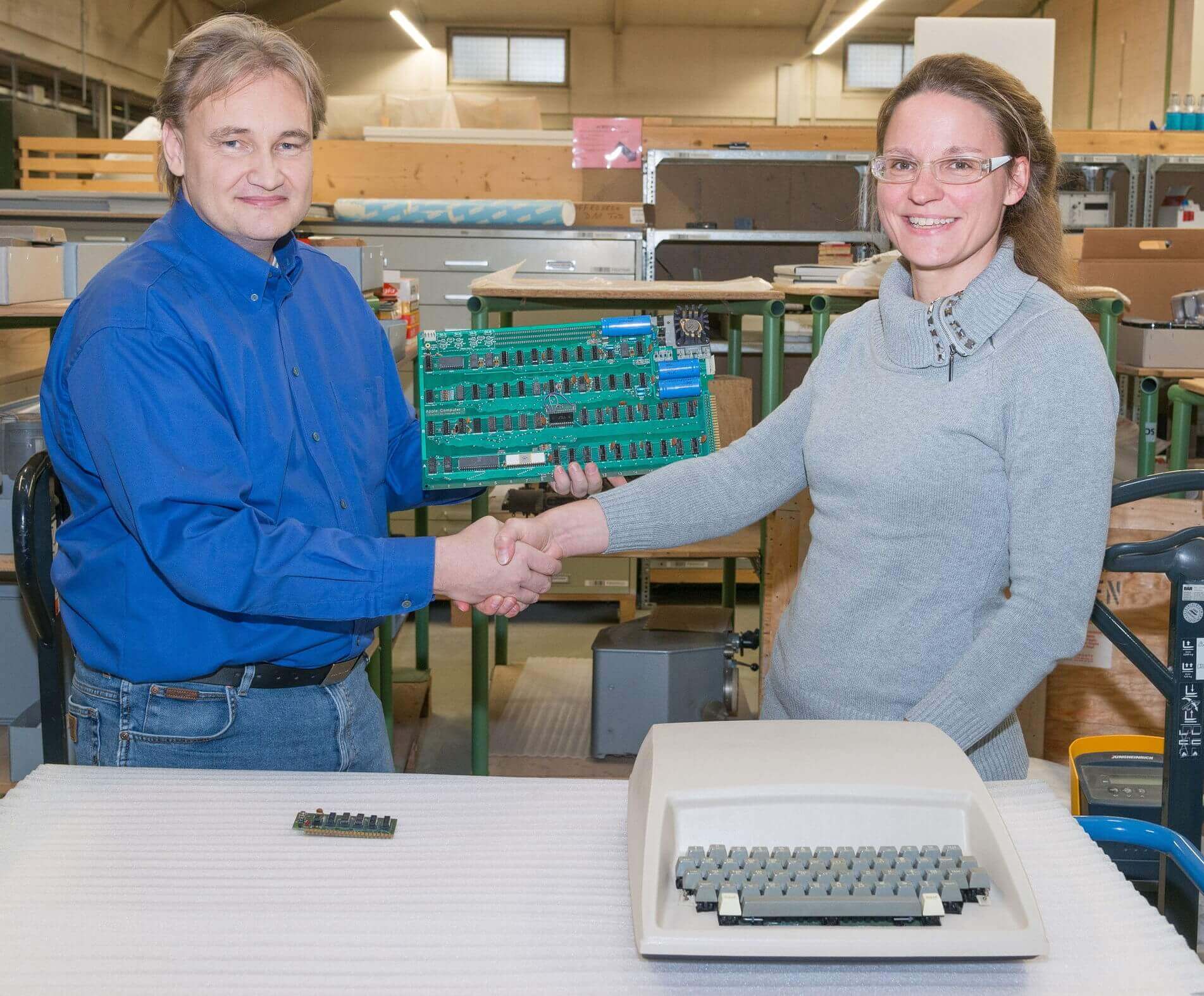 +
Copson Apple-1 object-acceptance with curator Anja Teuner. *1
+
Copson Apple-1 object-acceptance with curator Anja Teuner. *1
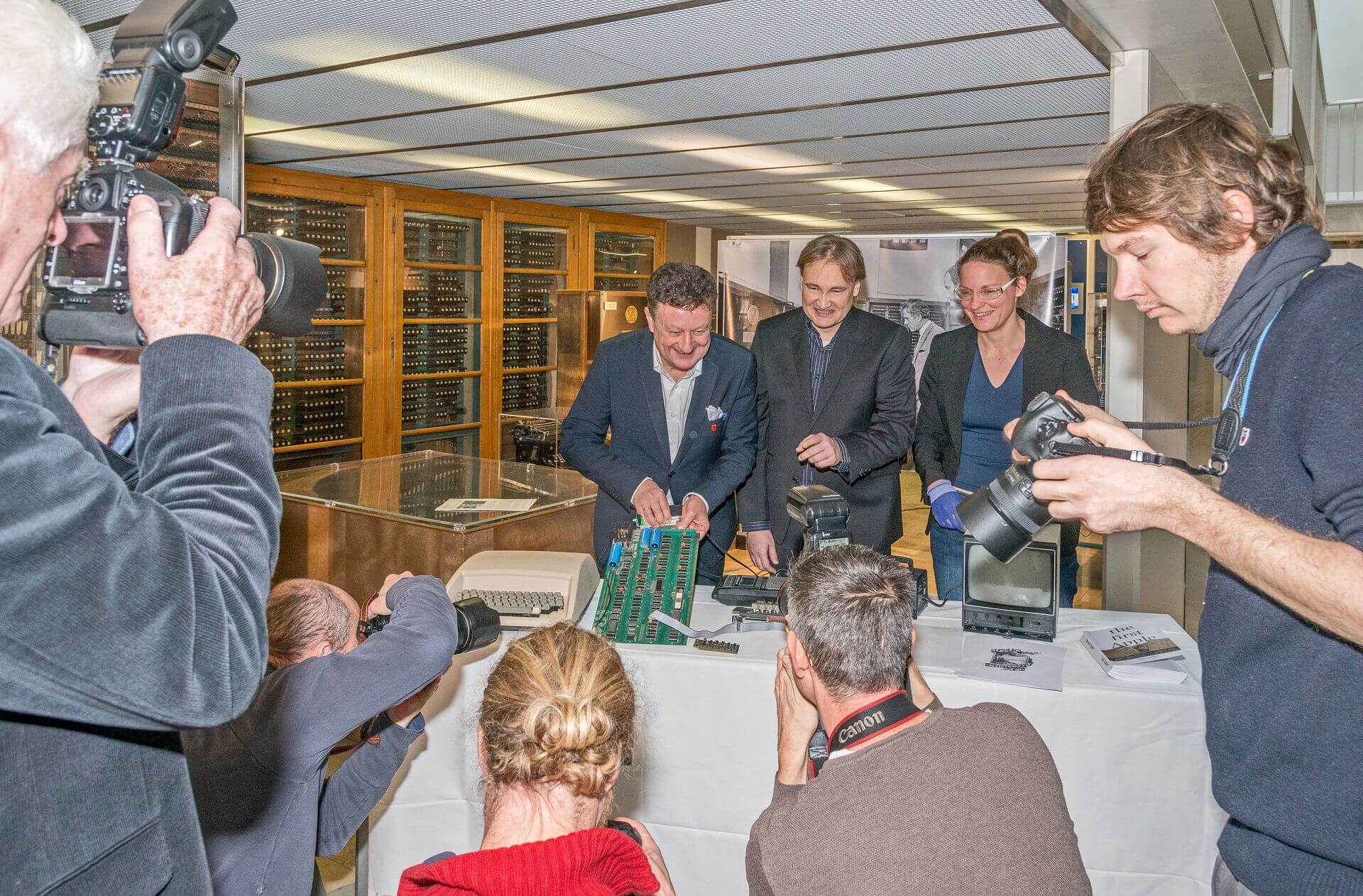 +
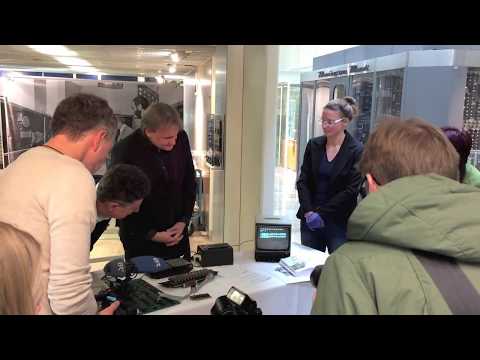
Copson 1 handover press conference. *1
+
Copson 1 handover press conference. *1
 +
Copson 1 handover press conference. *1
+
Copson 1 handover press conference. *1
ZKM Karlsruhe / Germany
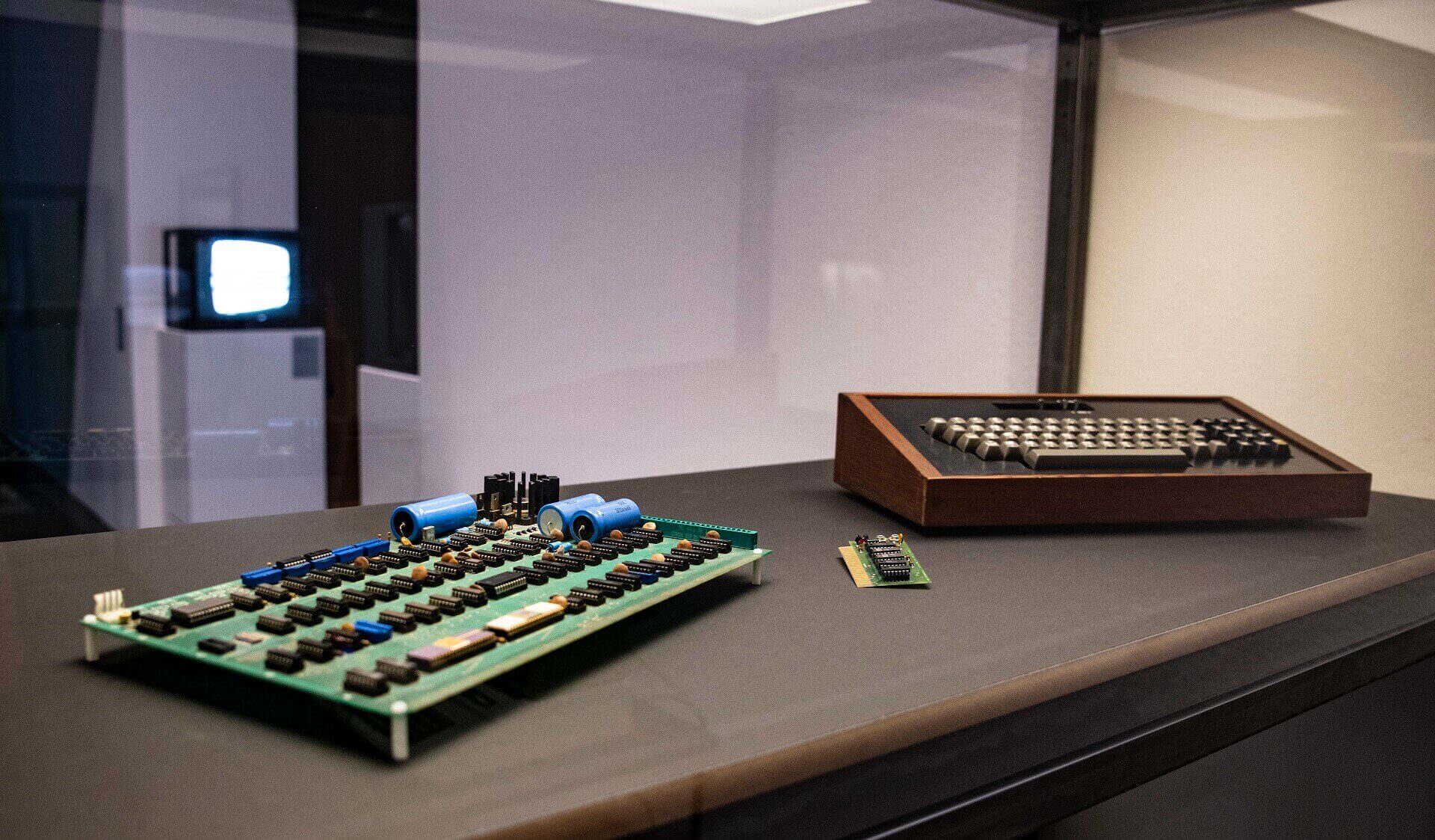
From July 14, 2018 until February 10, 2019, the Dryden Apple-1 was on display at ZKM, Center for Art and Media, Lorenzstraße 19, 76135 Karlsruhe. ZKM Website (German only, please use an online translator).
The exhibition was called „Kunst in Bewegung. 100 Meisterwerke mit und durch Medien.“ (Art in motion. 100 masterpieces with and through media).
A custom box was built to protect the mainboard, cassette interface and keyboard. It was transported to Karlsruhe by special transport in June 2018.
It was given to the museum free of charge.
The Apple-1 remains in the condition in which its first owner used it in 1976. The first owner added some parts and replaced a socket. In my view, after more than 40 years, this is part of its history and belongs to the board. I preserve this condition. Not even cleaning was carried out. This is the approach many museums prefer. Restoration would only be done if the artifact were endangered or badly damaged. But this Apple-1 is in working condition, and all parts are original. Nothing has been changed, and no components have been added or replaced later, except for the keyboard socket and the parts added by the first owner in the 1970s.
The electronics added in 1976 are inverters used for the keyboard. The keyboard is homemade, as were all keyboards used for an Apple-1 in the 1970s. Apple did not offer a keyboard.
The added components, the inverter ICs, were necessary to use some keyboards in 1976. Many Apple-1 computers have been modified for auctions in the past. Those added parts were removed and a 1977 or even later Apple II keyboard was attached. The Dryden Apple-1 is still in its 1976 state, including the keyboard. Not everyone agrees that it is worth destroying the history of an Apple-1 mainboard by removing 1976 parts that were necessary to use a 1976 keyboard merely to make the mainboard look “clean” and attach much later keyboards.

Computer History Museum in California, USA
In 2019, Apple-1 owners were invited to attend as exhibitors at VCF West 2019 (Vintage Computer Festival) at the CHM (Computer History Museum, Mountain View, California / USA) on August 3rd and 4th, 2019.
It was a wonderful opportunity to catch up with friends in California and to meet other Apple-1 owners. Some I already knew in person, others only through email conversations.
During the trip, I was invited by Jamis MacNiven of the famous Buck's of Woodside and by Daniel Kottke. There was also the chance to see Wendel Sanders again, and many others. And then there was John Draper, also known as Cap'n Crunch, whom I met at Daniel Kottke's house and at the VCF.
After the exhibition, following another invitation, I flew to L.A. and met another Apple-1 owner.
Aurora Tucker, together with Dag Spicer from the CHM and Corey Cohen, asked me to bring as many Apple-1 computers as I liked. Two Apple-1 computers can be handled in hand baggage. Transport was up to me; insurance for the exhibition was provided.
It was great to meet other Apple-1 owners, auction house representatives and vintage computer enthusiasts. There was even someone with a nice Apple-1 that was not listed in the Apple-1 Registry. We negotiated about the price.
Conversations with Allen Baum, Krishna B. Blake, Dana Carlton and many others kept me busy for hours. Another appointment was arranged with someone from Chicago. He later sold me a KIMSI and other items.
Together with some Italian gentlemen, we were the only foreigners. Claudio Parmigiani showed a very nice extension for the Apple-1 to make music.
My Duston-2 Apple-1 and Flatiron Apple-1 were on display. For a presentation on stage by Daniel Kottke, a reliably working Apple-1 was needed. My Duston-2 was used for this purpose.
Getting the two Apple-1 computers to California and back home to Germany was not as easy as it should have been. Part of the story is here.
 +
My Duston-2 on stage with Daniel Kottke at VCF West 2019 (California)
+
My Duston-2 on stage with Daniel Kottke at VCF West 2019 (California)
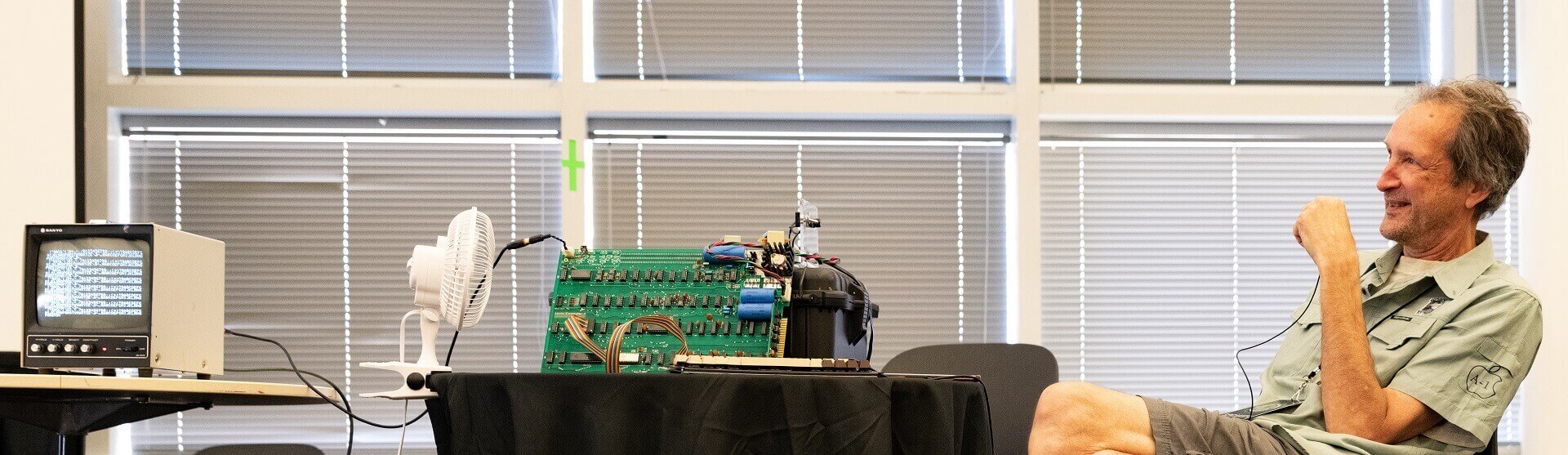 +
My Duston-2 on stage with Daniel Kottke at VCF West 2019 (California)
+
My Duston-2 on stage with Daniel Kottke at VCF West 2019 (California)
 +
My Duston-2 surrounded by visitors on stage at VCF West 2019 (California)
+
My Duston-2 surrounded by visitors on stage at VCF West 2019 (California)
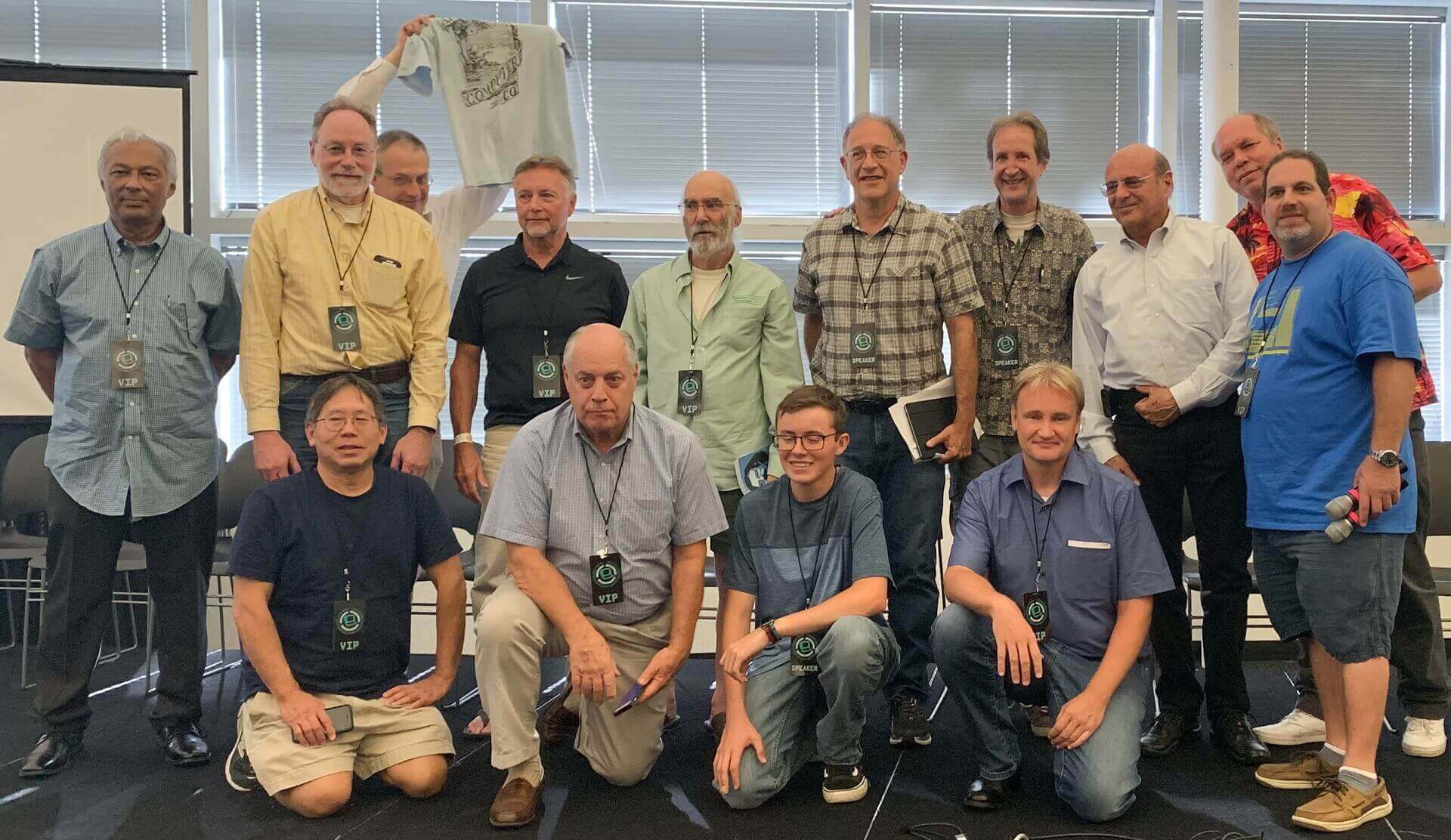 +
Apple-1 owners at VCF West 2019, Mountain View (California)
+
Apple-1 owners at VCF West 2019, Mountain View (California)
 +
Apple-1 owners at VCF West 2019, Mountain View (California)
+
Apple-1 owners at VCF West 2019, Mountain View (California)
+
Apple-1 owners at VCF West 2019, Mountain View (California)
+
Apple-1 owners at VCF West 2019, Mountain View (California)
 +
Some Apple-1 including 2 of mine at VCF West 2019, Mountain View, Mountain View (California)
+
Some Apple-1 including 2 of mine at VCF West 2019, Mountain View, Mountain View (California)
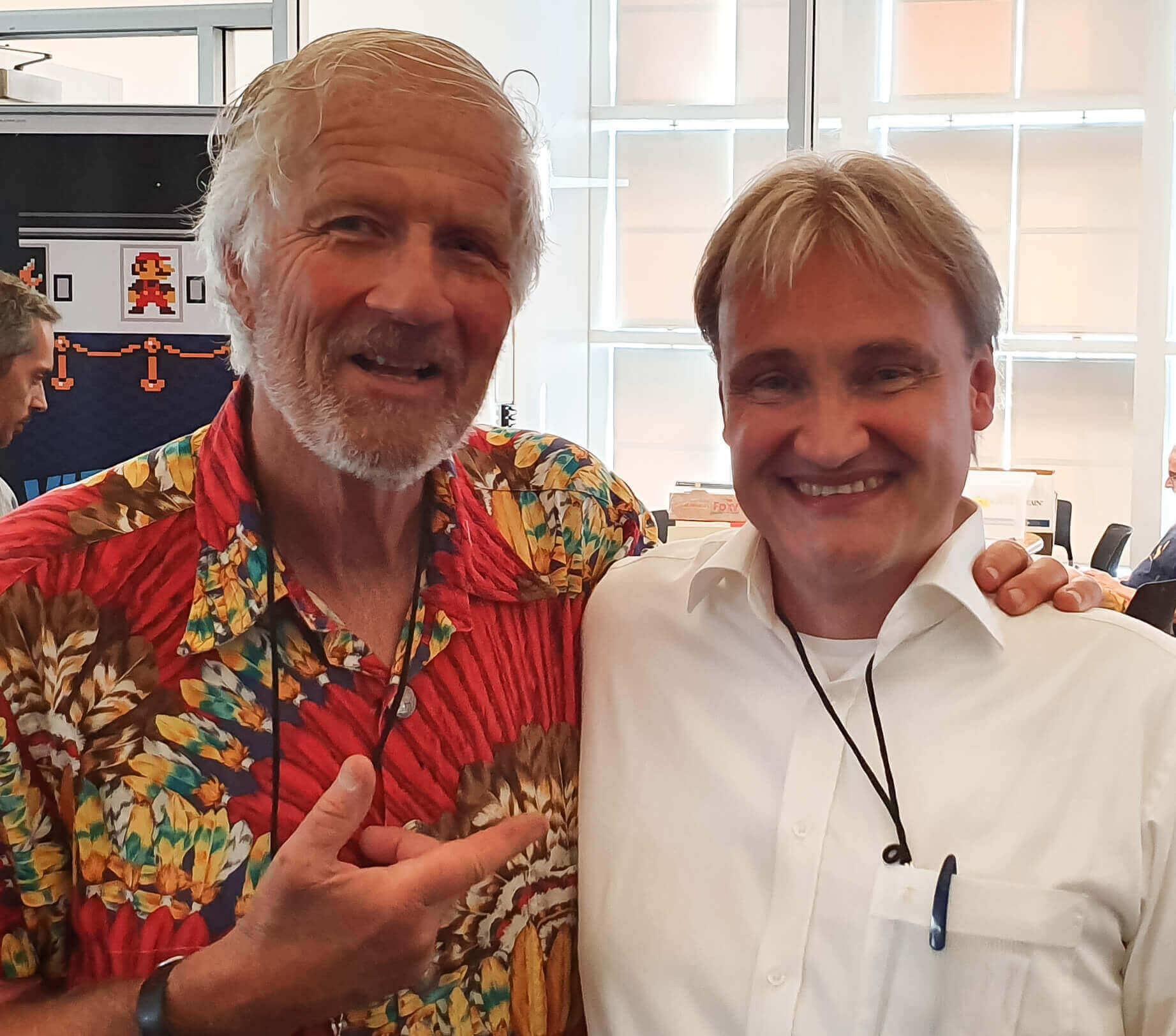 +
Jamis MacNiven and me at VCF West 2019 (California)
+
Jamis MacNiven and me at VCF West 2019 (California)
 +
John Draper aka Captain Crunch (California) at the VCF West 2019
+
John Draper aka Captain Crunch (California) at the VCF West 2019